
In Quotes
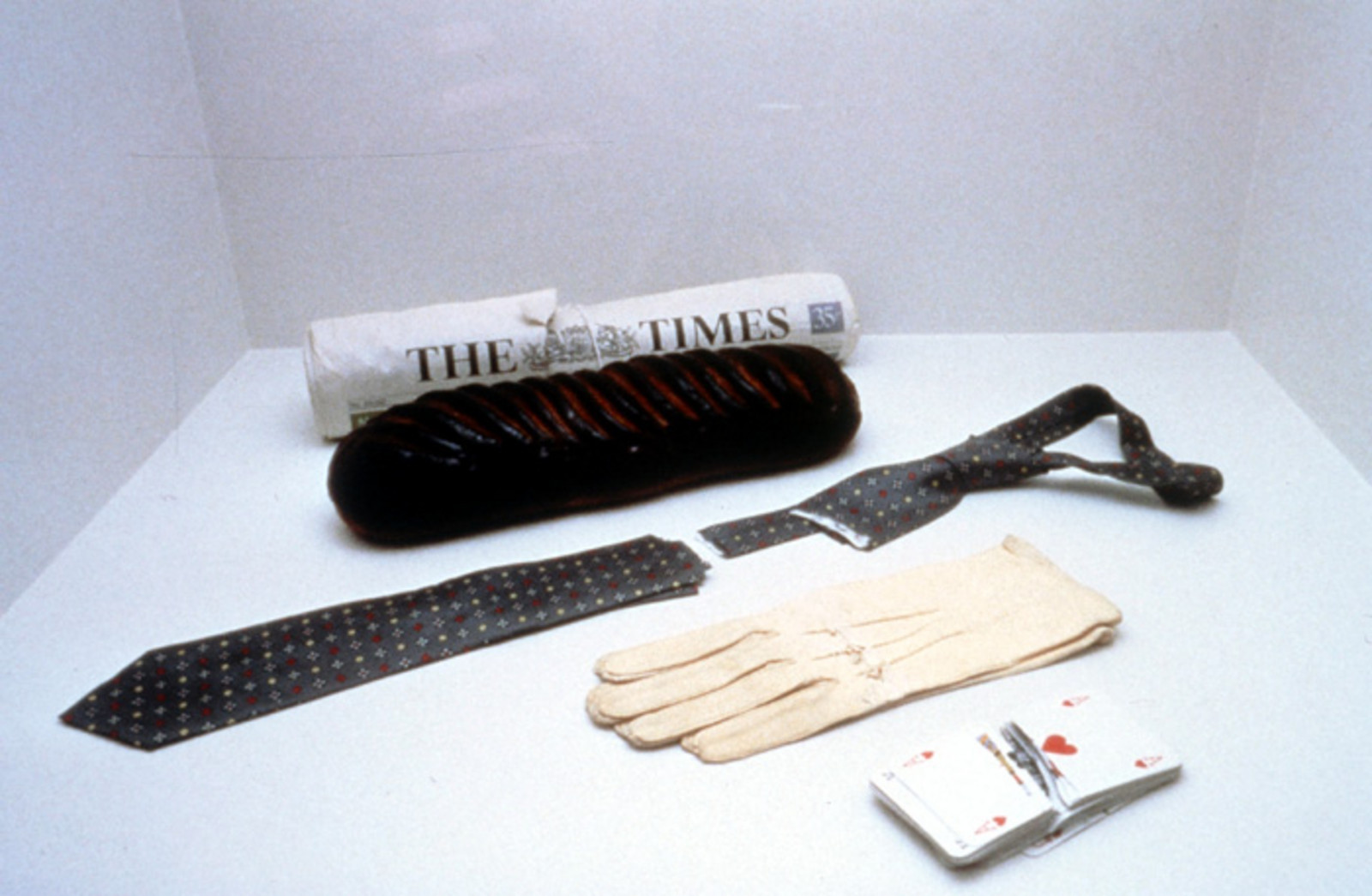
Why can’t contemporary art just be pretty?
It is a curse of recent fine art that one must always shoehorn concept in to their creative product, otherwise it fails to hold meaning. From the political to the personal, artists everywhere attempt to make their work hold relevance, rather than the product of their endeavours existing only as an object. However, this often leads to the purity of an imagine being undermined by an element that is seen as extraneous or arbitrary. Your own interpretation of the piece at hand is as valid as the artist’s intent, as art is solely subjective – yet, if seeing it as merely a beautiful object is not enough, as proven by the behaviour of artists, does that invalidate those that want to just appreciate aesthetic?
My reason for the mention of this rather perplexing paradox is due to the newest exhibition at Norwich University of the Art’s EAST Gallery, conveniently located just outside of the lanes. It is a stunning space, vaguely industrial in feel due to its exposed girders and metallic floor, which then meet clashingly with pristine white walls. What once housed a bright pink naked man (Hans-Peter Feldmann’s David in Pink) now provides accommodation for a series of intriguing collage works. Those that are exhibiting range quite wildly not in technique but in notoriety, from the somewhat obscure to the overwhelmingly successful – namely, Cornelia Parker.
This individual alone may prove enough of a draw to some people, as she is undoubtedly very successful –
I mean, she got an OBE for God’s sake. What more do you want?
When I was in college (well, when I wasn’t gushing over Banksy) this artist was one of my favourites, particularly in the case of Cold Dark Matter; an installation piece made in 1991 that consisted of an exploded shed, suspended perpetually in mid-blast. There is something very visceral about this – a real moment made unreal by its lack of movement. Whether or not one found it to be pretty, the response garnered would hold more weight than base visual appreciation, as its impact is subversive – somewhat going under the radar. Similar affects can be found within the other seminal pieces of that creative generation, such as Rachael Whiteread casting a house out of concrete and Michael Landy destroying all of his possessions. There is something happening in all of these works that was not limited to a statement – it leans more toward a dialectic, wherein the audience response edges on the interactive, forcing them to project their own sensibilities on to the art.
You can only imagine how excited I was to see what piece the most contemporary gallery in Norfolk had chosen to exhibit.
Bread.
It’s bread.
Well, it is not just bread, of course. It is a piece of art, with the object becoming more than its default state because of a decision made by an artist. In this case, each item was cut in half by the same guillotine that beheaded Marie Antoinette. I’m not even joking – I know some of you are going to be sceptical. Literally Google ‘Cornelia Parker - Shared Fate’ (this piece’s tongue-in-cheek title) and it’ll inform you of this also.
Let’s take away the fact that it could’ve been sliced in twain by anything, mostly because that would be a whole other can of very artsy worms. Instead, think about the notion of the guillotine; a destructive force, a sight that would strike fear in to the hearts of the masses and a tool of choice for government-backed murder. The last execution made in this manner was as late as 1977, hence why such a terrible thing is still in common consciousness. It is an emotive thought – a cerebral feeling that puts in to perspective how far society has come in such a short amount of time.
Now, look at the bread.
Exactly.
This is the problem – and why I prefixed this review with philosophical posturing – because the moment wherein concept attempts to be the sole proprietor of a piece often acts as its ruination. There are exceptions but, mostly, arbitrary decision-making breeds emptiness – whether it is intended or perceived. What I see in Parker’s installation is something rather pretty, yet also rather dull. Admittedly, this wasn’t the only moment wherein I found contention.
Small images by an artist named Linder (because having one name is deep) involved photos of women with flowers stuck upon their face. Out of everything in the room, they were the plainest – a murky, hollow affair. A description on the gallery’s website attempts to point out what meaning there is, mentioning the commodification of the human body – but once again, it is an un-emotive piece, dealing with an emotive issue. Also, the contradiction in making an item that attempts to counteract the commodity, then selling the work, is almost hilariously ignorant.
Well, either that or I am still bitter about there being no red wine at the private view.
In all seriousness, I have my gripes about some specific parts of this show – yet, it is rather good. I found myself appreciating the visuals of the work much more than I often do, mainly because some of the pieces are absolutely stunning. There is an element of the cubist photomontage in many cases, which never fails to remind me of a mad stamp collector returning back from a shopping spree at Loose’s Antiques. Atop this sits the gently stifling nature of the contemporary gallery that, usually, I see as problematic but, in this case, acts to juxtapose the clinically white calls with small, delicate, dark artworks. If you can say anything about NUA’s newest exhibition space, it does make you pay attention to detail.
That is the thing, really – it is all very, very pretty. There are a few exceptions, of course, but this is just my own relative preferences. There is a gentle nature to all of the pieces installed which made me much more intrigued by the aesthetic than what elaborate reasoning may be present. I could hear people vocalising their attempt to look deeper and, while this happened, I smiled, as I was still having fun. What is neither worse nor better is that what I was feeling seemed much more genuine, as it was a simple interaction between myself and an artwork. No pretentions or expectations, just shrugged shoulders, a glass of prosecco and an approach not unlike a televised dating show.
It may sound banal, especially considering the space I was in, but the whole experience was rather lovely.
My opinion on this show may also sound like an insult – but it is not. Despite how I am a conceptual artist myself, I respect people who know their craft much more than formaldehyde sharks and unmade beds. Therefore, this response is of the highest esteem – even though some artists may hate that I consider their intent mostly superfluous.
Yes, this article israther critical – however, it also includes the best compliment I can give; I enjoyed looking at the work. There is nothing more pure or genuine than that.So, why not pop down? Its location is central to the city and it might be fun to see if you find meaning where I found prettiness.
“It is quite pretty though,” a friend of mine blurted out, after trying to put forward the argument that a lot of the work was really deep.
“My point exactly,” I said, looking smug.
In Quotes is on at NUA’s EAST Gallery, 30th August to 7th OctoberTuesday – Saturday 12-5pm, with free admission.
Visit http://www.nua.ac.uk/thegallery/in-quotes/ for more information
More Art
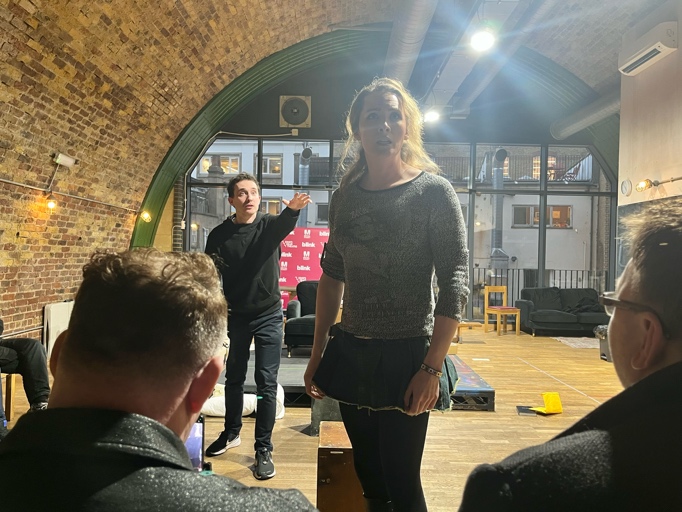
Phil Porter’s Blink
Phil Porter’s Blink
A Sneak Peak of the Play
Can the seas survive us?
Can the seas survive us?
Is it something we are all aware of but just put at the back of our minds? See the take of our reviewers ...
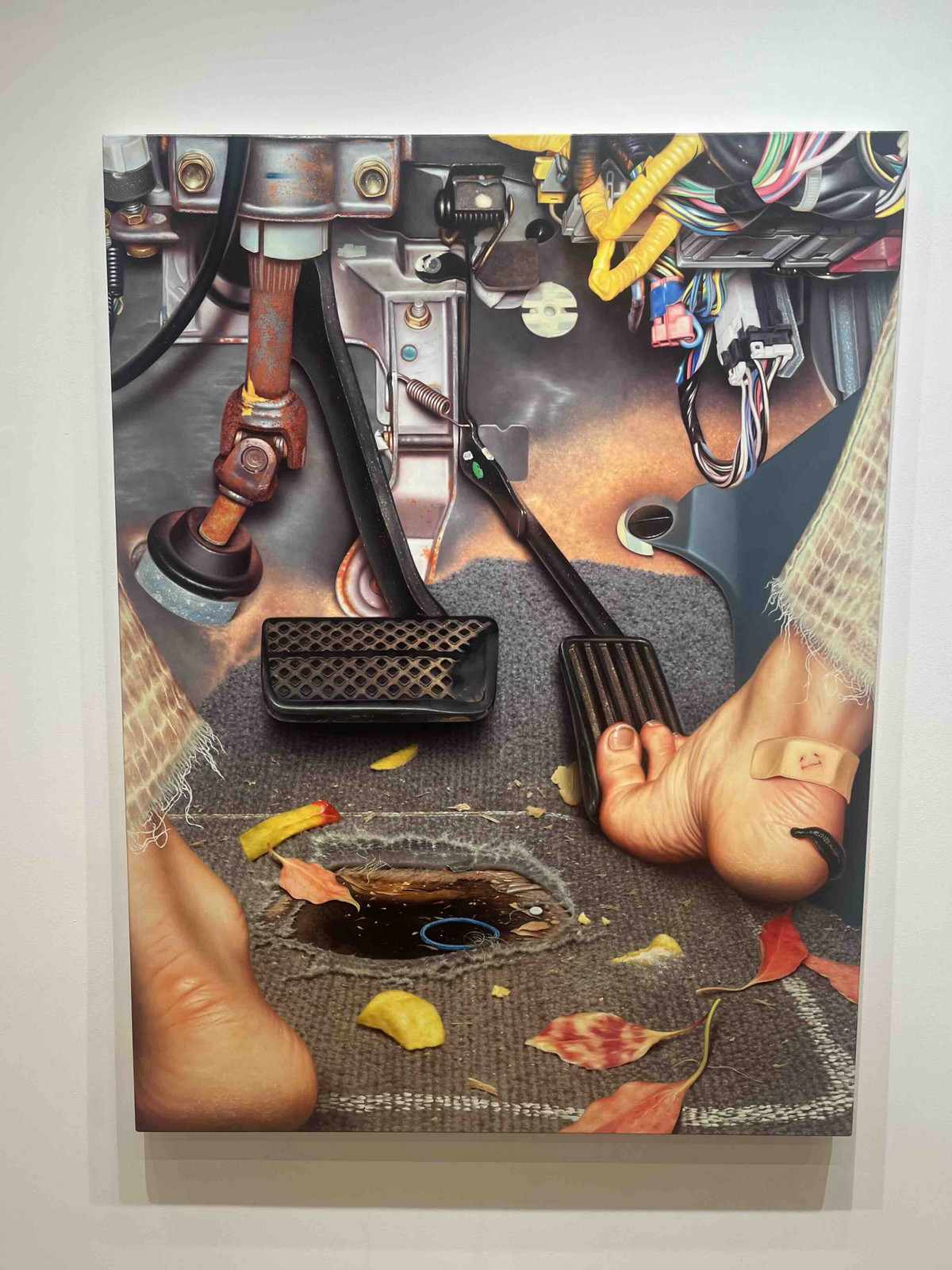
La Subida Del Destino and Road Runner
La Subida Del Destino and Road Runner
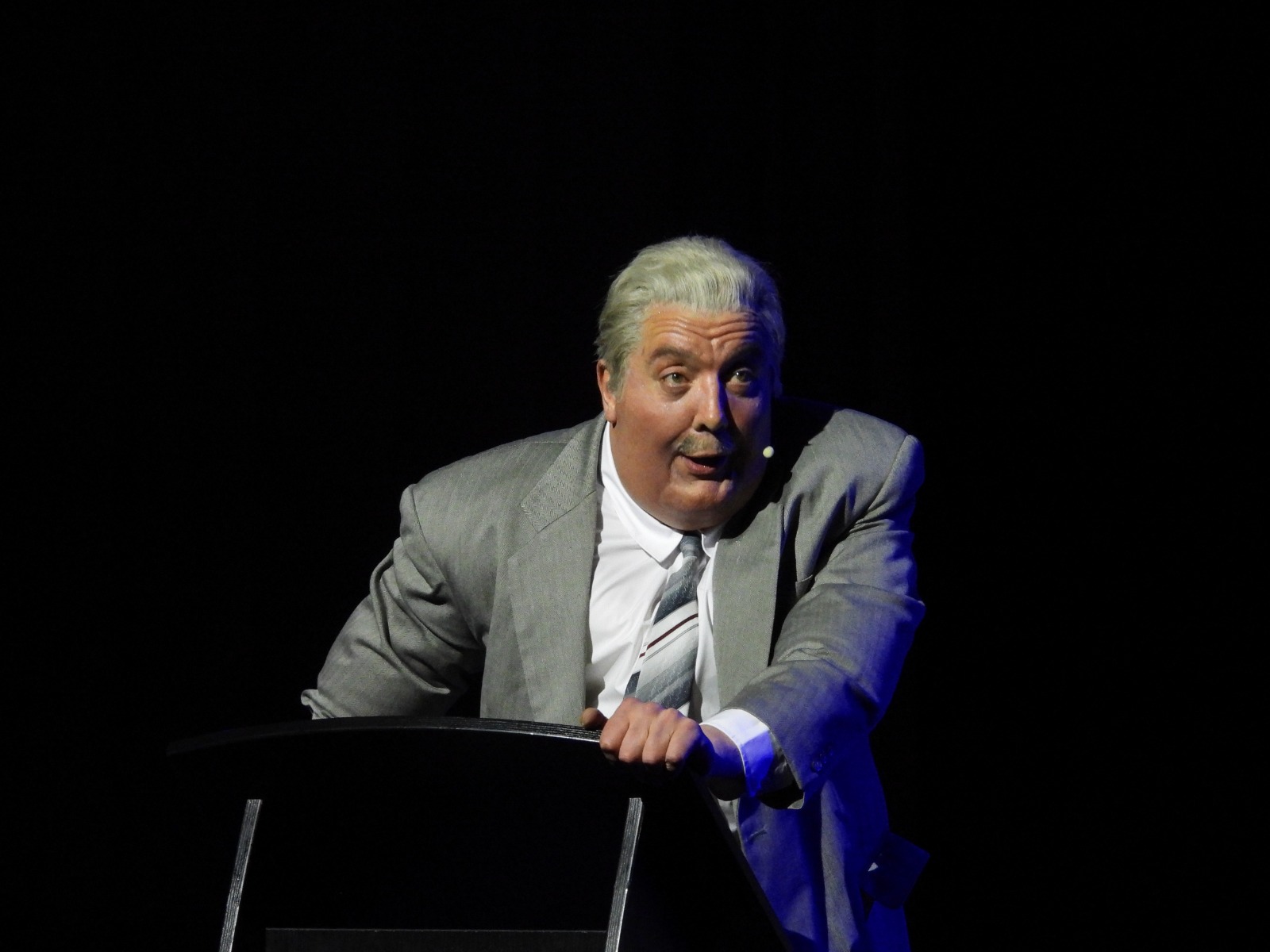
Peter Serafinowicz as Brian Butterfield
Peter Serafinowicz as Brian Butterfield
In the words of the famous Norwichonian Delia Smith “Let’s be having you come to see my show!" on the 16th June
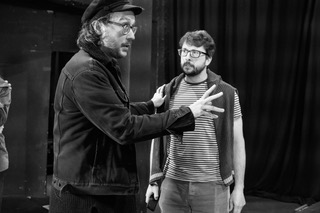
Directors of Twelfth Night @ Maddermarket Theatre
Directors of Twelfth Night @ Maddermarket Theatre
· What power do you believe theatre holds?---- It is live. Real people perform in front of real people. It is dynamic and present in the moment for both actors and audience. Therefore, every performance in a production is different.
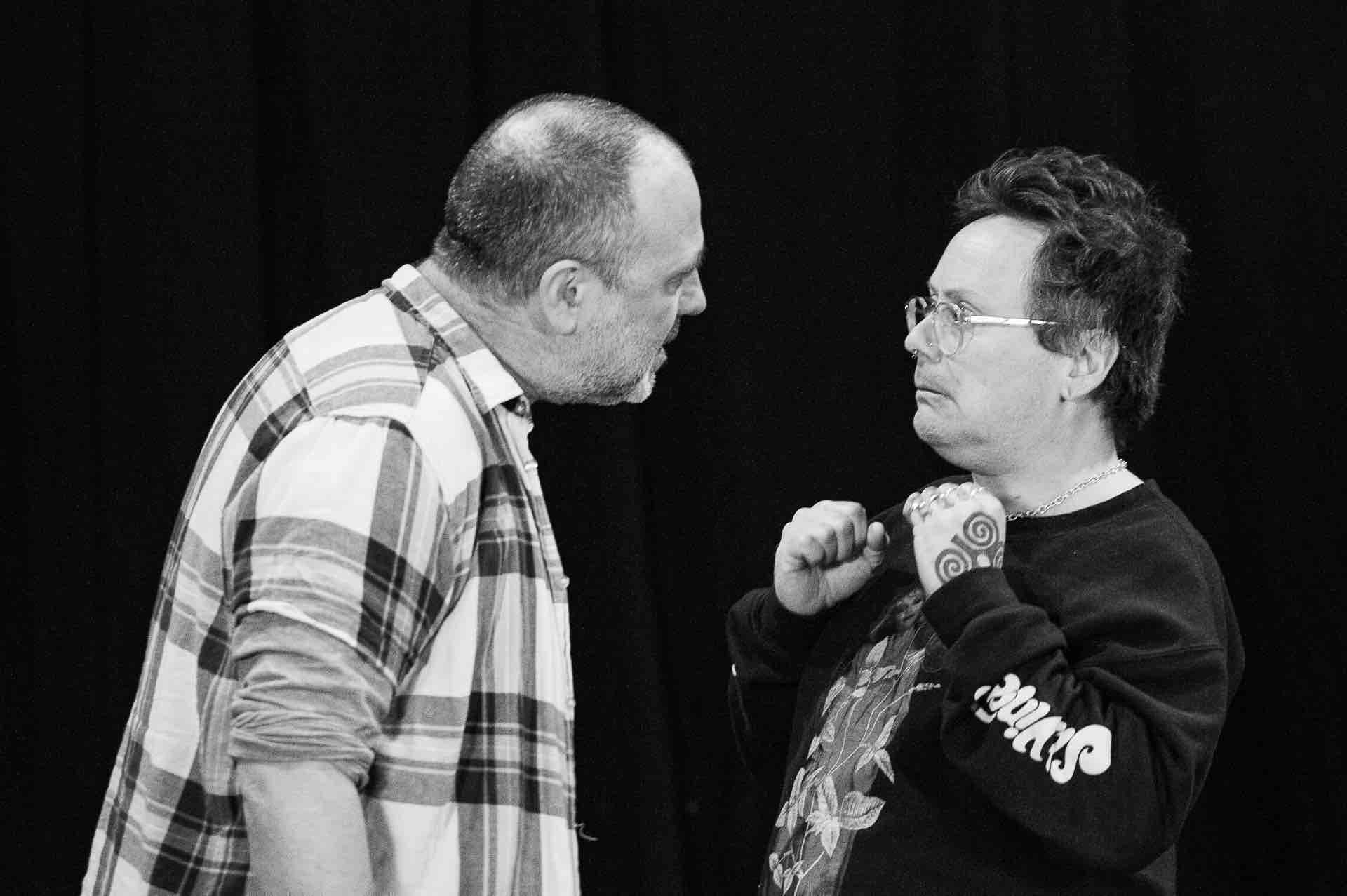
The Cast of Twelfth Night @ Maddermarket Theatre
The Cast of Twelfth Night @ Maddermarket Theatre
More by Greg
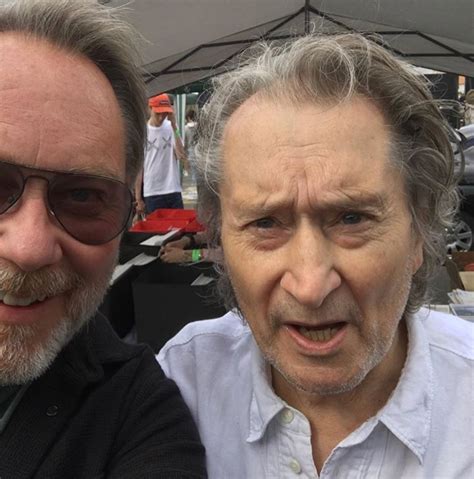
I Think We Should Just be Friends - Colin Self and Jim Moir (aka. Vic Reeves)
I Think We Should Just be Friends - Colin Self and Jim Moir (aka. Vic Reeves)
We Came Here To Conquer
We Came Here To Conquer
NUA MA Degree Show 2017
NUA MA Degree Show 2017
UNA Gallery - Light And Space
UNA Gallery - Light And Space
Klanghaus - 800 Breaths
Klanghaus - 800 Breaths
NUA Graduate Show
NUA Graduate Show
Related Articles

Chris McCausland
Chris McCausland
The most I’ve laughed in “yonks”!

Ray O'Leary - Laughter? I Hardly Know Her
Ray O'Leary - Laughter? I Hardly Know Her
Ray O'Leary, is fair to say, has a distinctive way about him. Wild, curly hair. Beer belly out and proud. A face only a mother could love. And that suit. It's a look that says he knows exactly what he’s doing and that he does it very well.

Carousel - Norfolk and Norwich Operatic Society
Carousel - Norfolk and Norwich Operatic Society
Another fabulous production from the entire team at Norfolk & Norwich Operatic Society.
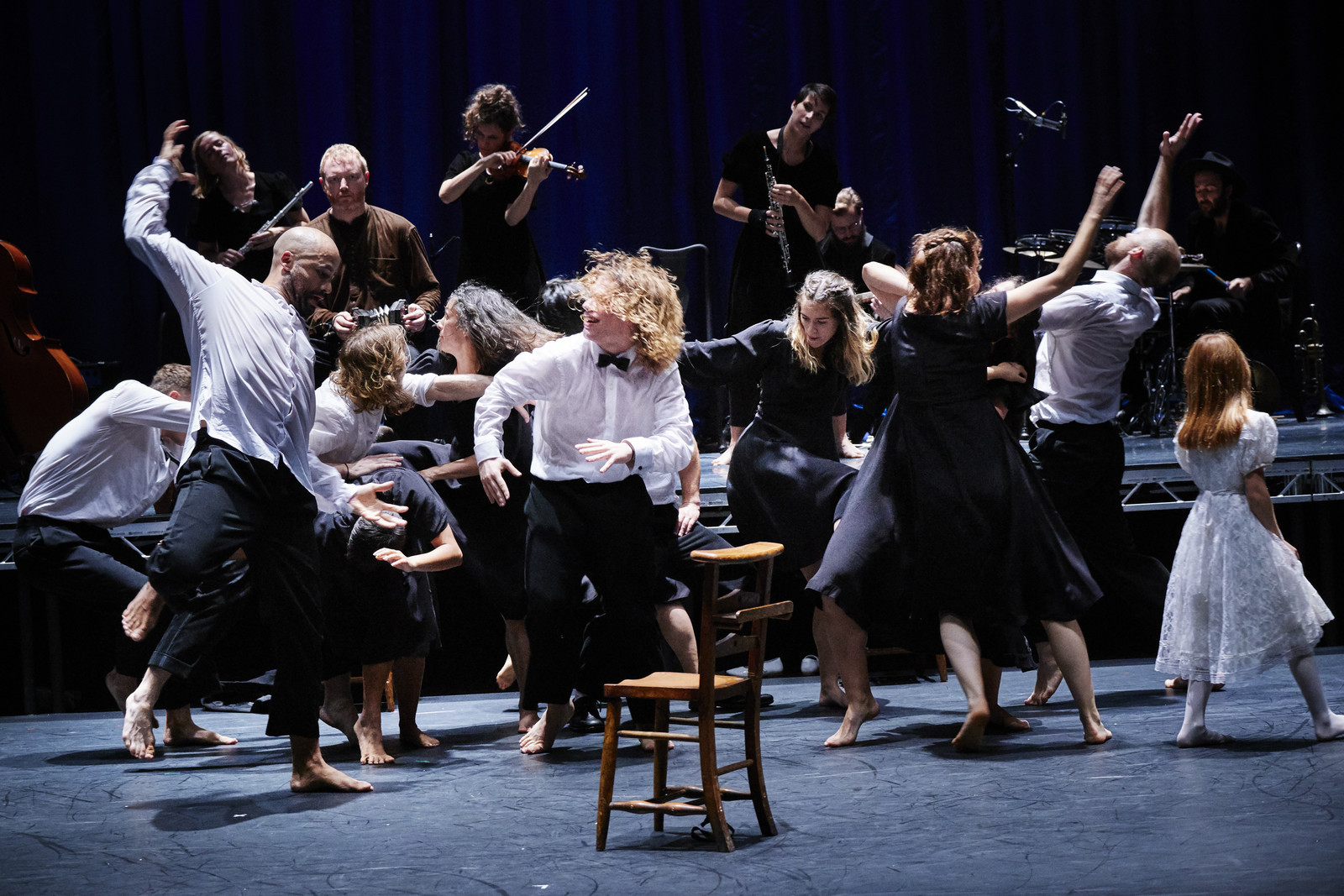
Teaċ Daṁsa / Michael Keegan-Dolan - MÁM
Teaċ Daṁsa / Michael Keegan-Dolan - MÁM
Those that see this show will leave with a renewed sense of warmth and hope in their souls. It is a visceral tribute and testament to the music, the traditions and the culture of the people of the Kerry coastline
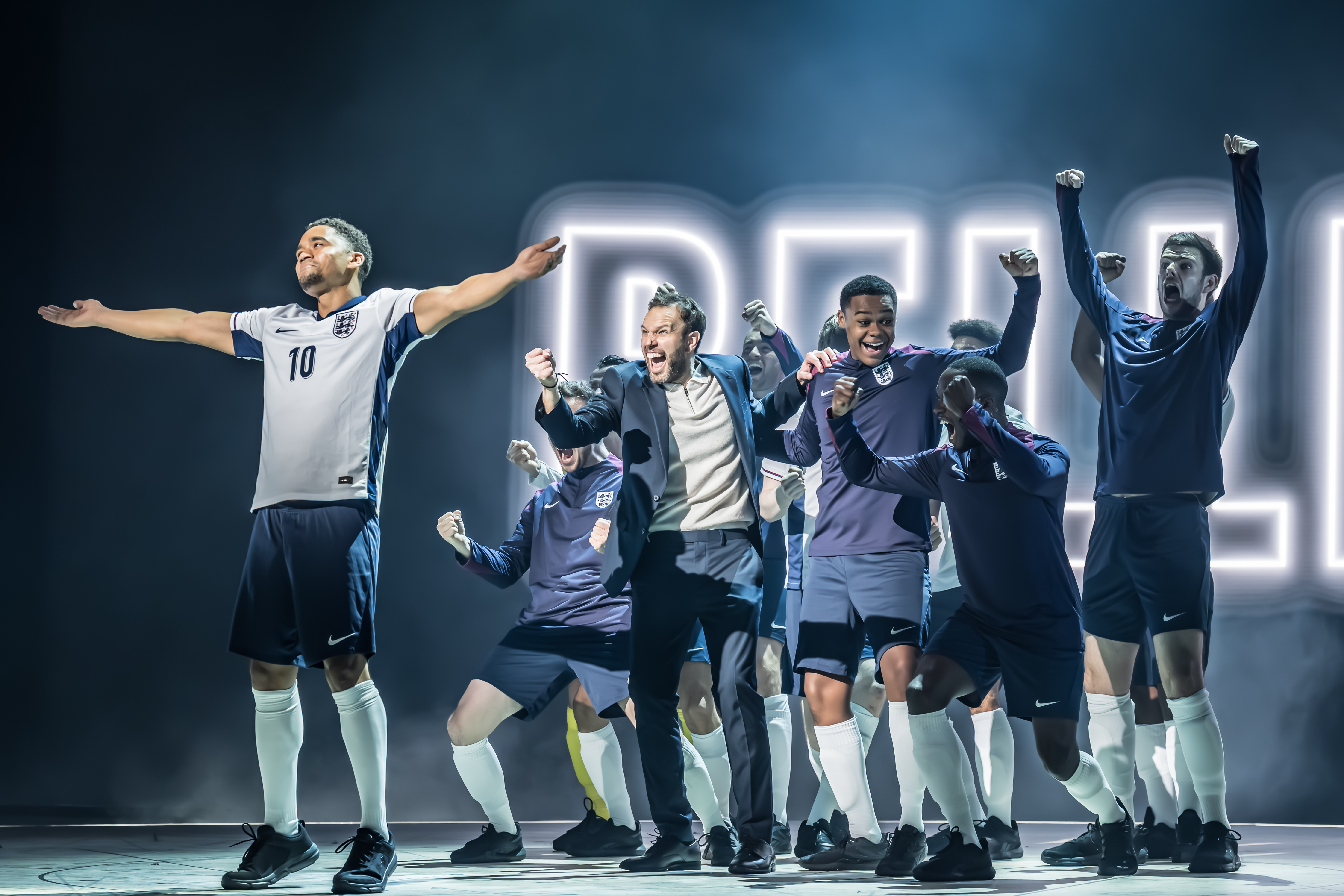
Dear England
Dear England
This play about football was not really about football at all. It was a play about male bonding, humanity, mutual respect, facing your demons, and about meeting with triumph and disaster, and treating those two impostors just the same.

The Anglia Comedy All Stars
The Anglia Comedy All Stars
On another night, any one of the line-up could have reasonably headlined a comedy night — Ed Gamble, Rachel Parris, and Paul Sinha on the same bill felt almost like overkill. All Stars indeed.