
I Think We Should Just be Friends - Colin Self and Jim Moir (aka. Vic Reeves)
Across the flat planes of Norfolk countryside, through vast swathes of rurality and heavy accents, lies a land that celebrities rarely tread. This, of course, is our fair city of Norwich – a little island within a sea of calm countryside, often denigrated for its lack of external accessibility. Personally, I consider this as a positive thing, as it keeps out the riff-raff. Yet, we cannot suffice socially if our only notable visitor (post-1805) is Stephen Fry. Luckily, in a small, back-alley exhibition, this need has been sated.
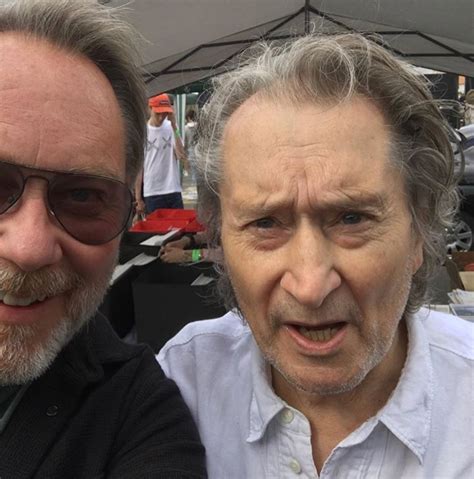
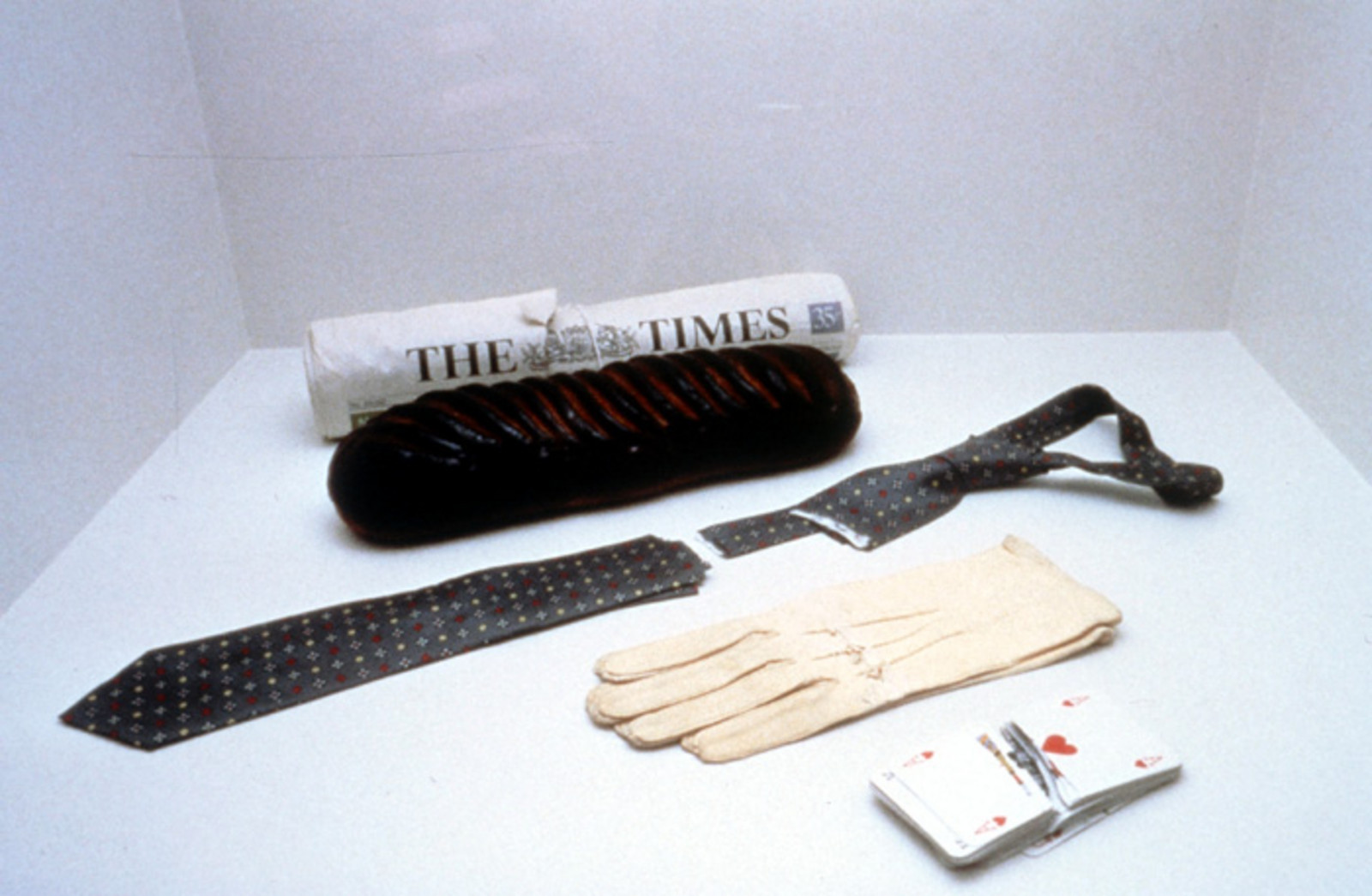
Fairhurst Gallery is currently hosting an eponymous comedian’s recent creative output and, as far as I am concerned, the musings of his Norfolk-born mate. However, I get ahead of myself, as I haven’t even outlined the purpose for this show. Jim Moir – or Vic Reeves, as you will probably know him – has been creating what can only be described as ‘art’ for quite a while now. These expressions are eclectic and remarkably expressionist, often using traditional mediums in a somewhat challenging way. Colin Self is also there, making hot dogs out of glasses cases.
As far as I can tell, these two gentlemen are friends and, as all friends do, they have decided to set up a contemporary art exhibition together. I remember my first bromance, in which Michael and I would regularly go skip stones across the Broads – before painting that stone in a minimalist fashion and renting out Stew Gallery.
Those were the days – but you don’t want to hear about that.
Instead, I will be completely honest with you; I expected this show to be a bit of a damp squib. After looking at Moir’s work on his website, I felt very little toward his previous output. In the case of Colin Self, it is impossible to avoid knowledge of his work if you are an artsy person in Norfolk. This is probably due to how he studied at Wymondham College (as he was born in Rackheath) and even vague artistic success is celebrated here. Maybe the forceful pushing of Self as a valuable local artist had instantly soured my opinion, but I could never really engage with his work. So, I wasn’t the most positive critic in the world, as I stumbled through thick snow in to the show’s private view.
Imagine my shock as I suddenly found myself stood aghast, staring at a selection of Jim Moir’s work with a genuine feeling of adoration. There is something intrinsically human to his art; naivety, comedy, humbleness, sadness and glee all intertwine between paintings that feel almost chronological. As one’s eyes traverse the sometimes-garish colours upon the walls, the overwhelming feeling is of a narrative with an unreliable narrator, or a hidden personal process that may never be discovered. While they are not the prettiest of items, their imperfections and surrealist compositions make each piece feel counterintuitively both dramatic and understated. Take, for example, a painting of a giant crab fighting a flying snake, which is then placed near a messy self-portrait of the comedian, gurning shamelessly. It shouldn’t work, but it really, really does.
In previous articles, I have made statements surrounding the validity of art if it is grounded within reality. If that is achieved, it impacts the audience more, as it is not just an artificial product. This, theoretically, can be extended to personal reality also – as art can be something just for the creator. ‘I paint because, if I don’t, I will explode,’ or something like that.
My thought is that Jim’s creative process has done more for him than it ever will for anyone else and, while that ensures its limited range, it is one of the truest forms of artistic expression. When thinking of this, my mind turned to Henry Darger (1892-1973) and what was discovered upon his death. This man, who is now widely recognised as one of the most intriguing artists to have lived, had a troubled life of hardship and poverty. When he passed away (and his neighbours began clearing out his apartment) a massive hoard of artwork was discovered. He had written extensively, including a fictional novel titled ‘The Story of the Vivian Girls, in What is Known as the Realms of the Unreal, of the Glandeco-Angelinian War Storm Caused by the Child Slave Rebellion’. Alongside this were a multitude of paintings, depicting the scenes detailed in the book and, naturally, all were unprecedented insights in to the mind of Darger, created by the artist, for nobody else other than himself. If that sounds interesting, I would recommend having a look in to him. There are even a few very entertaining YouTube videos documenting his life.
While this may seem to be a tangent, it is not at all, as I see Moir’s work as incredibly similar. It is a natural process for an artist who is not necessarily making work for anyone other than himself. Whether that be sitting down with a glass of wine in the evening to have a bit of a doodle or spending hours upon hours painstakingly painting, it is about the personal act of expression. Really, his work does not need to be exhibited, as its purpose has already been fulfilled. In fact, what would the case be if Jim Moir had not created the infamous Vic Reeves? What if Moir was not a celebrity, but an ordinary man? In a few decades, would neighbours stumble upon another hoard of artworks?
Regrettably, the direct opposite of this can be found on (ironically) the opposite side of the room. Self’s work, while as eclectic as Moir’s, does not feel interwoven or personal. It has the semblance of a series of independent works; all disconnected, not informing each other in the slightest. A lump of chrome in a glass case, some random collages and, of course, the aforementioned hotdogs, make up pretty much the entirety of Self’s exhibition input. While, when looking at Moir I saw genuineness and an understated humanity, all I see here is a man pretending. It is like an actor playing the role of an artist, inserting items in to a white cube that tick the cliché boxes of contemporary art. What is worse (and is made more painful by the presence of Vic Reeves) is the attempts at humour. Once again, it is someone playing the role of a specific field – in this case, comedy - with very little effect. The work is arguably tongue-in-cheek – only, in this case, the tongue has been severed and the cheek has a hole in it.
There is a definite split in the main exhibition space, with Moir on the left and Self on the right. This only helps to highlight the vast chasm between both artist’s initial impetuses and the subsequent audience impact. One is engaging and subtle, the other is brash and empty.
Yet, despite my genuine dislike of precisely half of the show, I would recommend everyone to go see it. Literally everyone.
Moir is the saviour here and, as his work screams of individual humanity, it is relatively universal in its appeal. Due to this fact, I can even garner a positive notion from Self, as the presence of his work helps to highlight how genuine his friend’s creations are. It is art as it should be, juxtaposed against everything that high art currently is. The gallery itself is a lovely setting too, which (if you haven’t already been) is worth an explore for its simple quaintness alone. Also, your children might find Self’s infantile humour somewhat amusing.
A log fire, surprisingly endearing artwork and some unfunny hotdogs – what more could you want?
I Think We Should Just be Friends is open at Fairhurst Gallery 1st – 31st March
Visit http://gallery.fairhurstgallery.co.uk/current-exhibition/think-just-friends for more information.
More Art
Phil Porter’s Blink
Phil Porter’s Blink
A Sneak Peak of the Play
Can the seas survive us?
Can the seas survive us?
Is it something we are all aware of but just put at the back of our minds? See the take of our reviewers ...
La Subida Del Destino and Road Runner
La Subida Del Destino and Road Runner
Peter Serafinowicz as Brian Butterfield
Peter Serafinowicz as Brian Butterfield
In the words of the famous Norwichonian Delia Smith “Let’s be having you come to see my show!" on the 16th June
Directors of Twelfth Night @ Maddermarket Theatre
Directors of Twelfth Night @ Maddermarket Theatre
· What power do you believe theatre holds?---- It is live. Real people perform in front of real people. It is dynamic and present in the moment for both actors and audience. Therefore, every performance in a production is different.
The Cast of Twelfth Night @ Maddermarket Theatre
The Cast of Twelfth Night @ Maddermarket Theatre
More by Greg
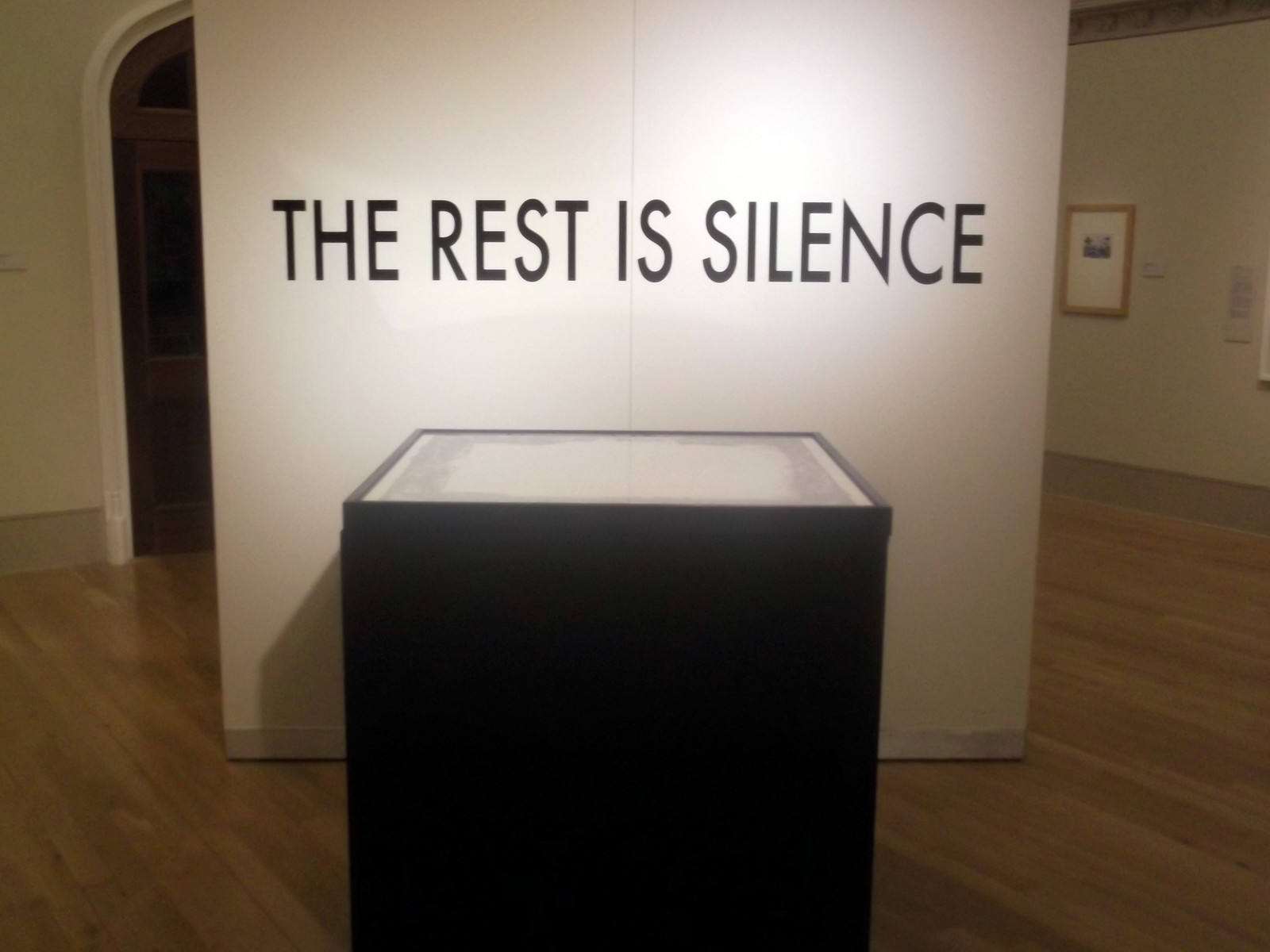
We Came Here To Conquer
We Came Here To Conquer
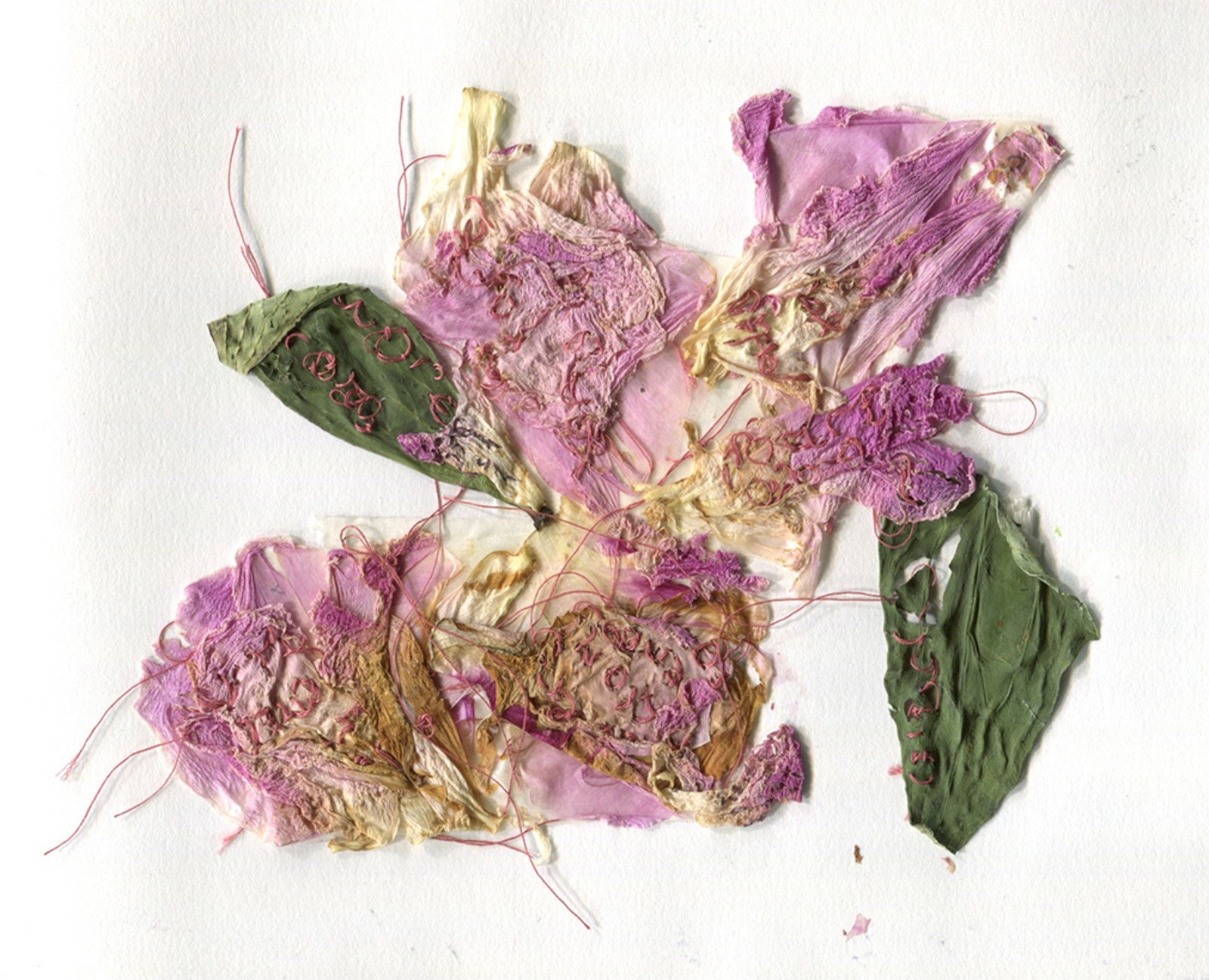
NUA MA Degree Show 2017
NUA MA Degree Show 2017
In Quotes
In Quotes
UNA Gallery - Light And Space
UNA Gallery - Light And Space
Klanghaus - 800 Breaths
Klanghaus - 800 Breaths
NUA Graduate Show
NUA Graduate Show
Related Articles
Chris McCausland
Chris McCausland
The most I’ve laughed in “yonks”!

Ray O'Leary - Laughter? I Hardly Know Her
Ray O'Leary - Laughter? I Hardly Know Her
Ray O'Leary, is fair to say, has a distinctive way about him. Wild, curly hair. Beer belly out and proud. A face only a mother could love. And that suit. It's a look that says he knows exactly what he’s doing and that he does it very well.

Carousel - Norfolk and Norwich Operatic Society
Carousel - Norfolk and Norwich Operatic Society
Another fabulous production from the entire team at Norfolk & Norwich Operatic Society.
Teaċ Daṁsa / Michael Keegan-Dolan - MÁM
Teaċ Daṁsa / Michael Keegan-Dolan - MÁM
Those that see this show will leave with a renewed sense of warmth and hope in their souls. It is a visceral tribute and testament to the music, the traditions and the culture of the people of the Kerry coastline

Dear England
Dear England
This play about football was not really about football at all. It was a play about male bonding, humanity, mutual respect, facing your demons, and about meeting with triumph and disaster, and treating those two impostors just the same.

The Anglia Comedy All Stars
The Anglia Comedy All Stars
On another night, any one of the line-up could have reasonably headlined a comedy night — Ed Gamble, Rachel Parris, and Paul Sinha on the same bill felt almost like overkill. All Stars indeed.